Nigerian Cook Book

A Cookbook of Nigerian Cuisine and HeritageAnyone interested in Nigerian cuisine.

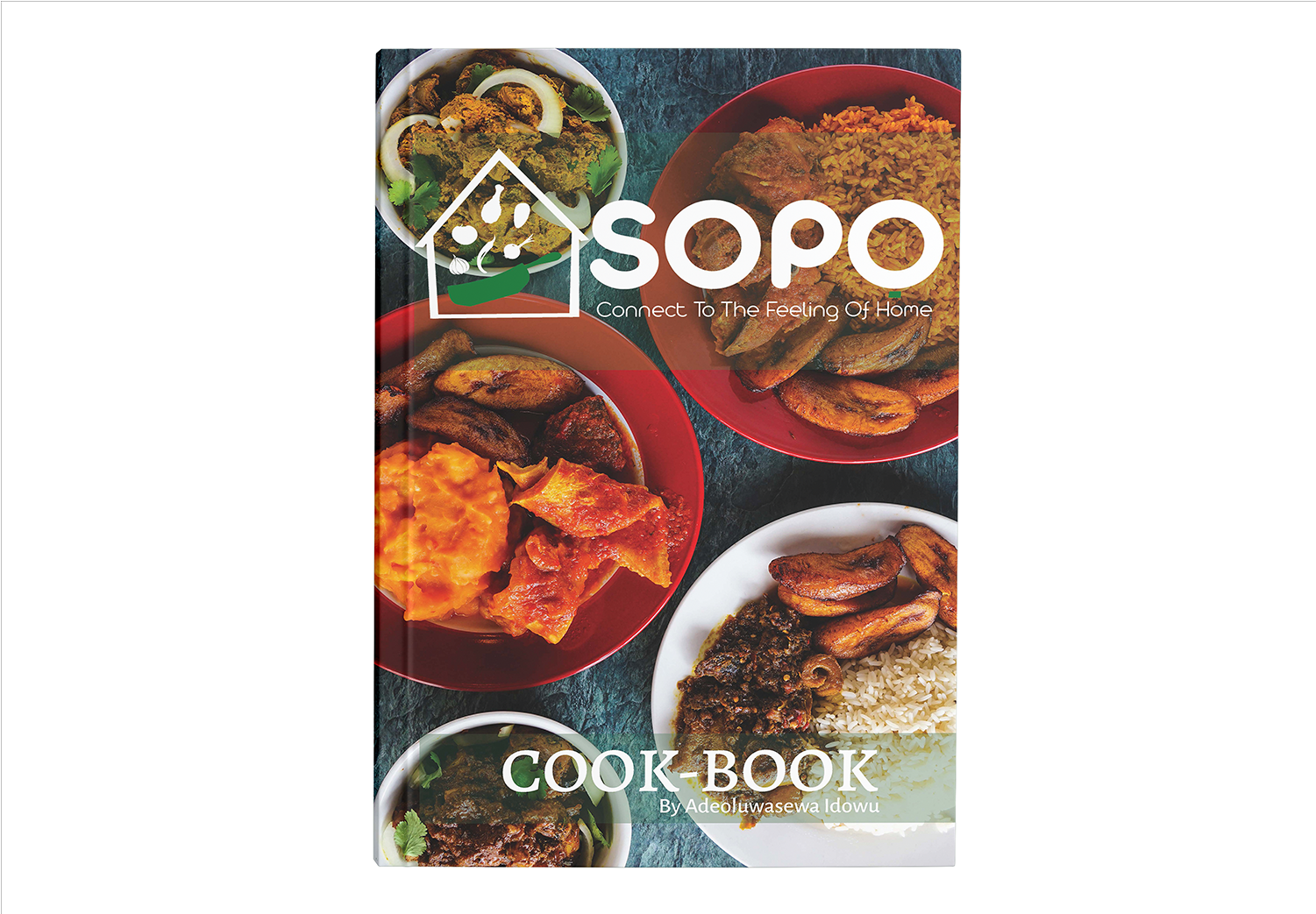
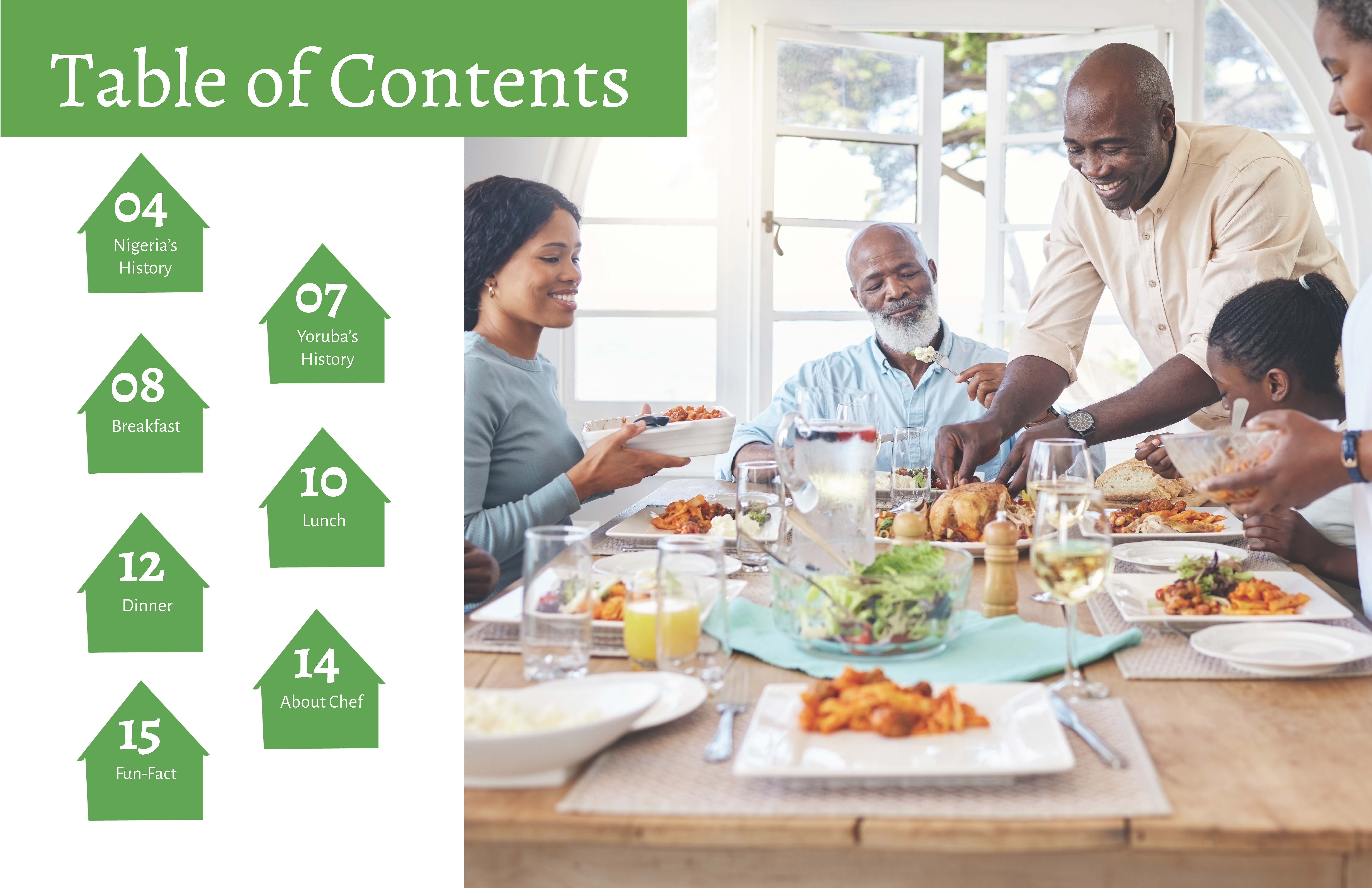
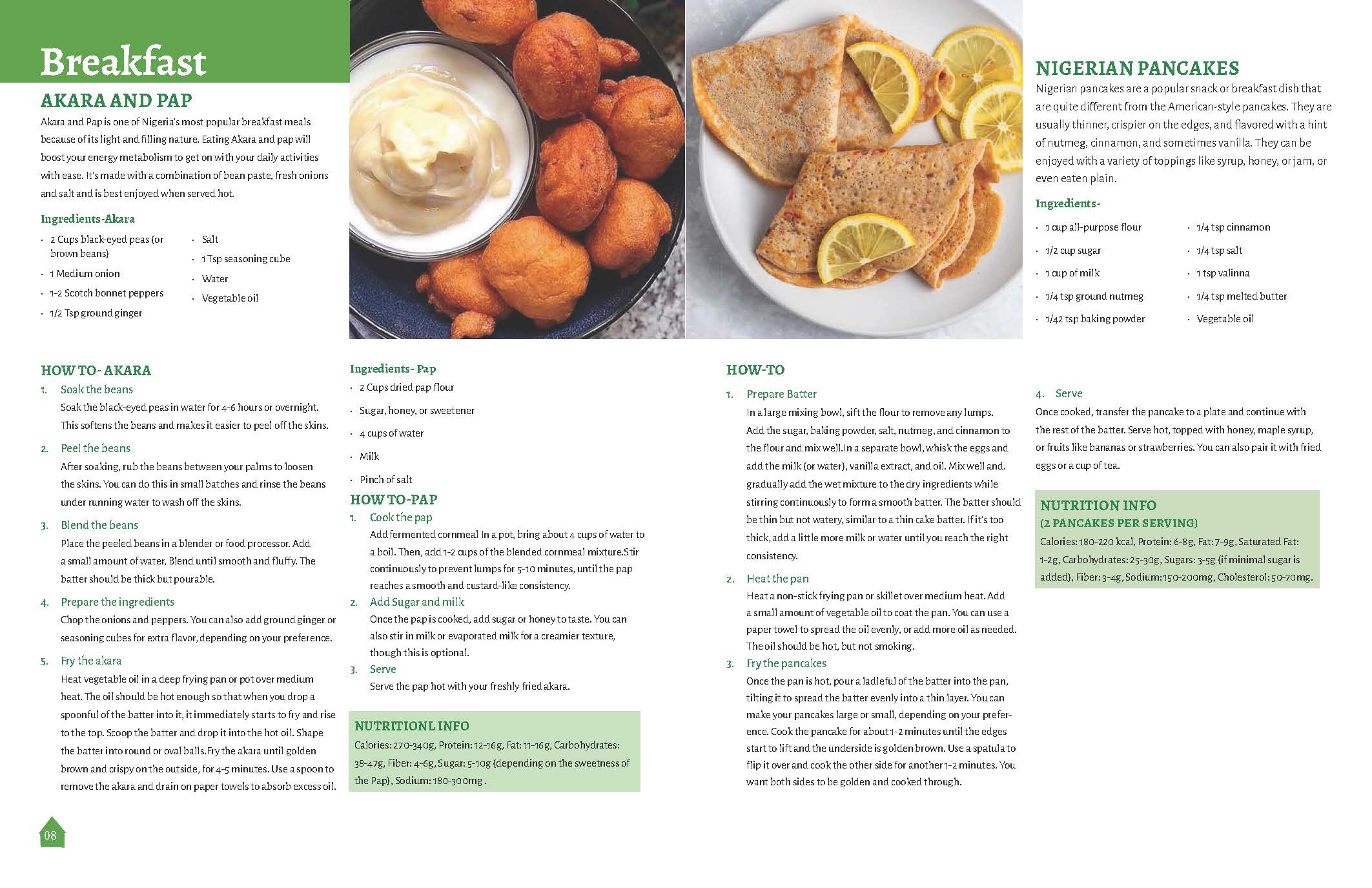
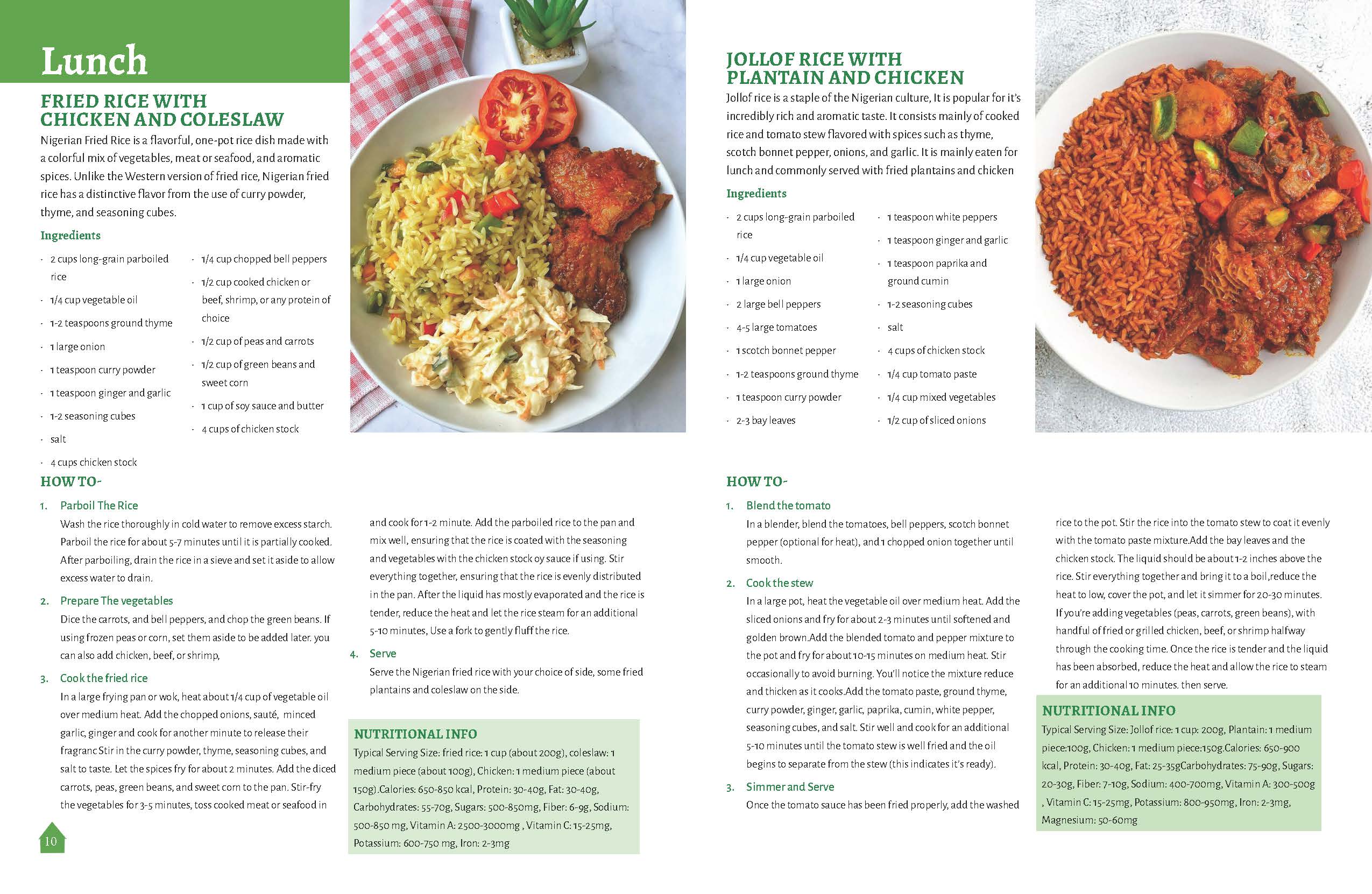
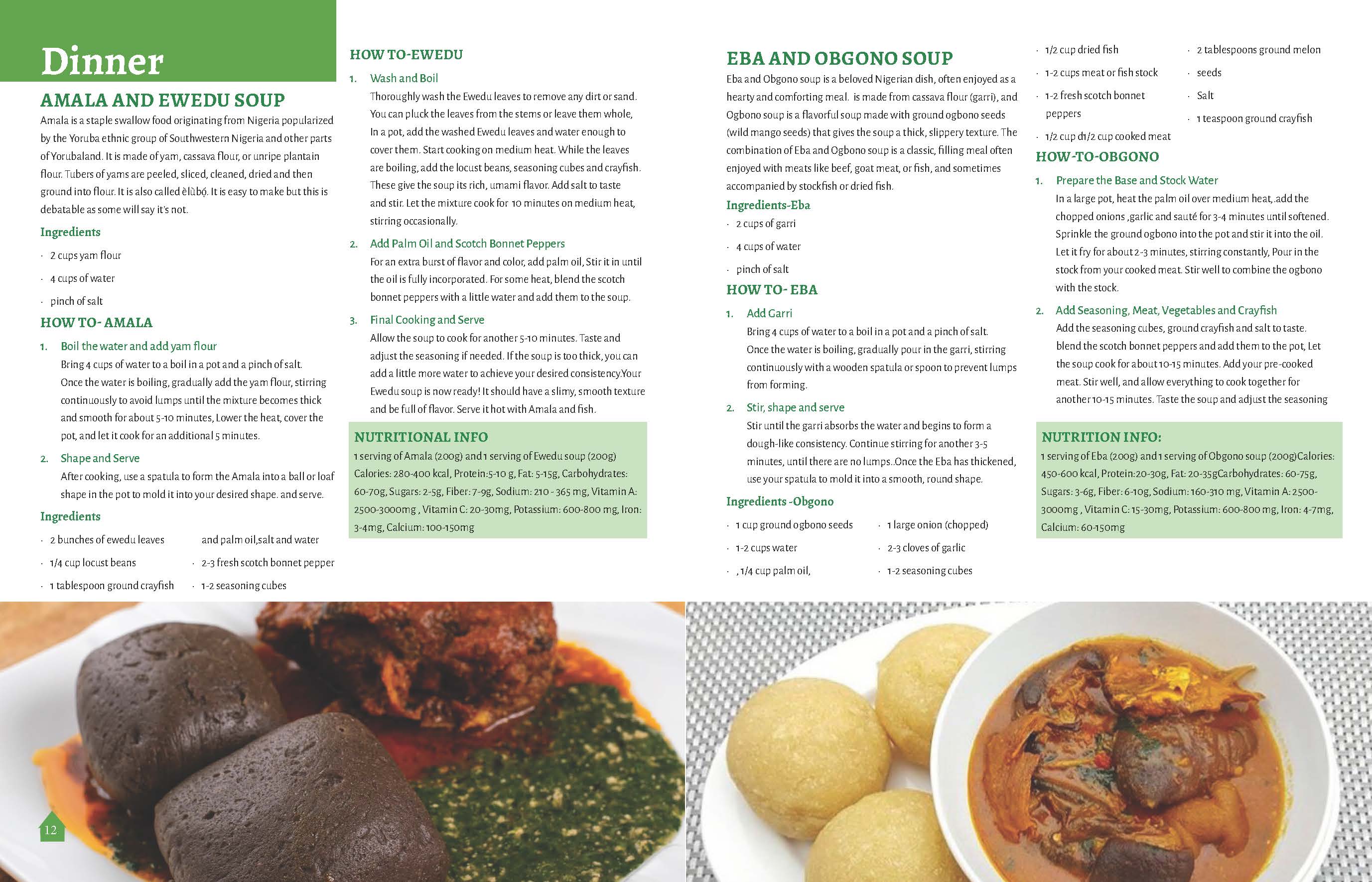
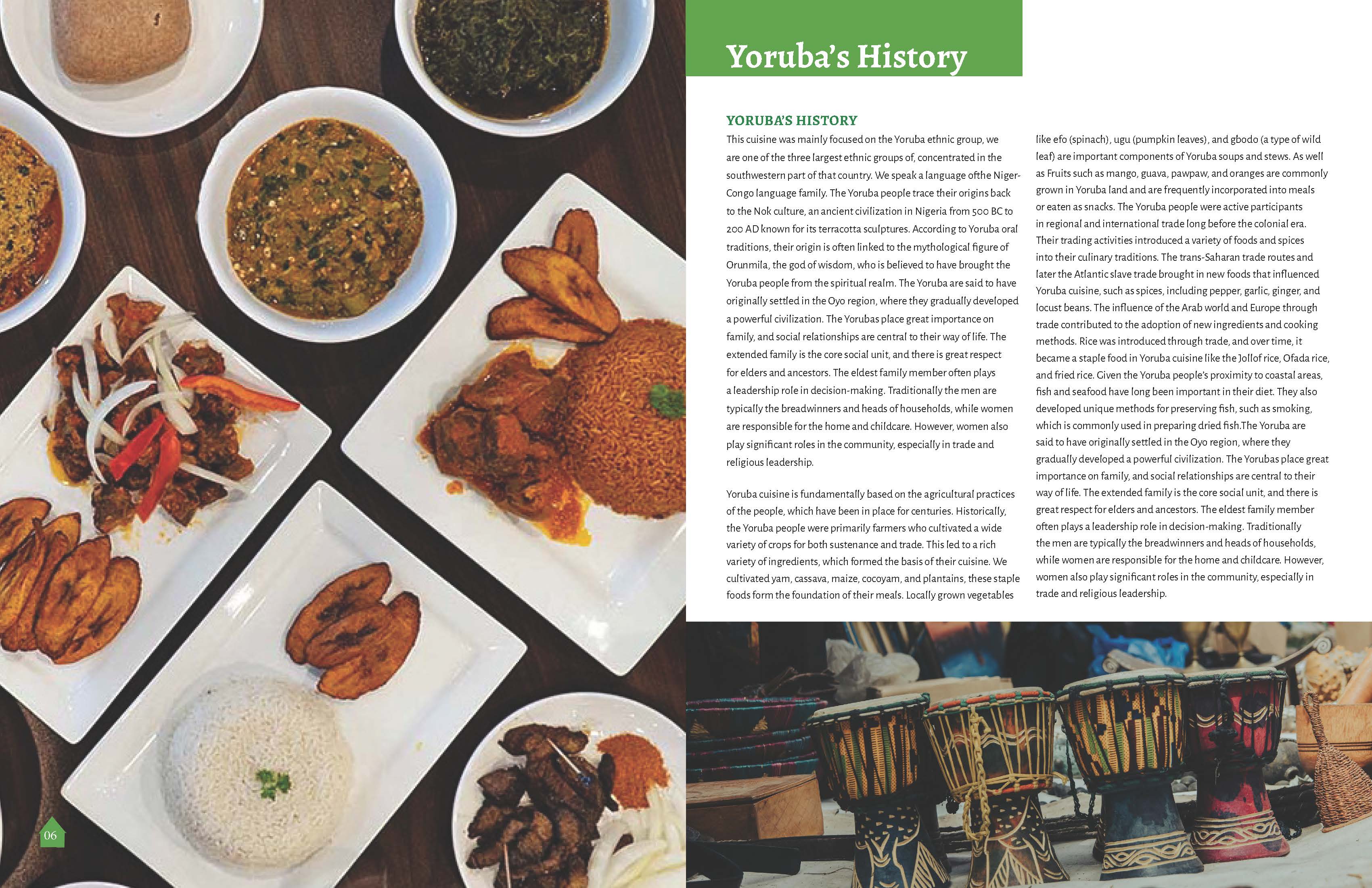
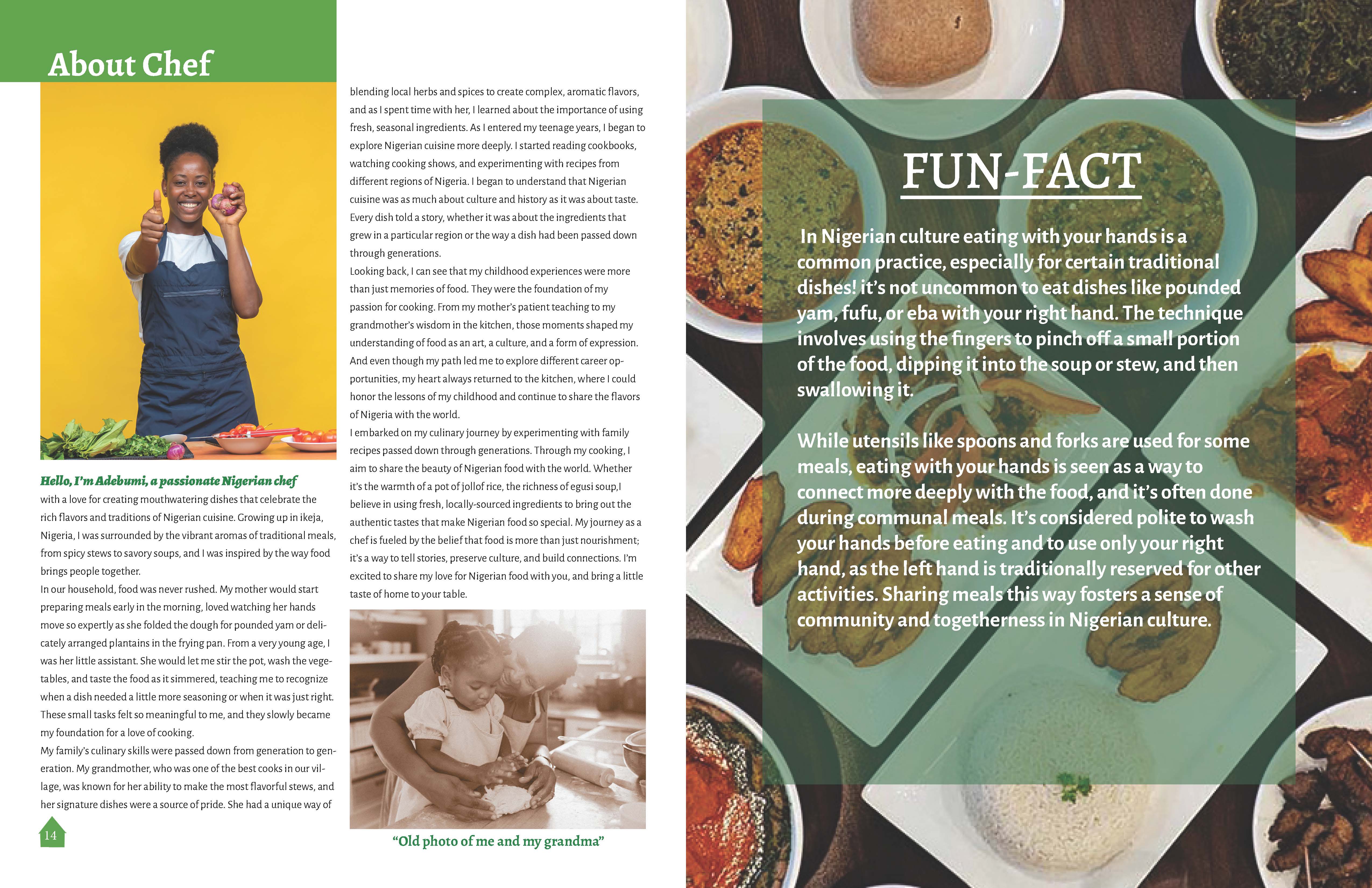
Typography sample showing Minion Pro font with uppercase, lowercase letters, and numbers, alongside color swatches of green #62a74f with RGB 99,166,78 and CMYK 66,13,92,1, and white #ffffff with RGB 225,225,225 and CMYK 0,0,0,0, next to a logo containing a house roof outline, a green floor plan shape, and the word 'SOPO' with tagline 'Connect To The Feeling Of Home'.Cover of a cookbook titled 'SOPO Connect To The Feeling Of Home' featuring images of traditional Nigerian dishes in bowls and plates, including rice, plantains, stews, and vegetables, with the author's name Adeoluwasewa Idowu at the bottom.Table of Contents on left listing Nigerian History, Yoruba’s History, Breakfast, Lunch, Dinner, About Chef, and Fun-Fact with page numbers; to the right, a multi-generation family enjoys a meal together at a dining table with various dishes and drinks in a bright room with large windows.Recipe page titled 'Breakfast' featuring Nigerian dishes Akara and Pap, and Nigerian Pancakes, with ingredients lists and preparation steps for each. The left side shows golden-brown Akara fritters around a bowl of white pap. The right side shows three folded pancakes garnished with lemon slices. Nutrition info for both dishes is included.Two-page cookbook spread showing Nigerian lunch recipes for Fried Rice with Chicken and Coleslaw and Jollof Rice with Plantain and Chicken, including ingredients, step-by-step cooking instructions, and nutritional information; left page features a white plate with yellow fried rice, coleslaw, grilled chicken, and tomato slices, right page shows a white plate with red jollof rice and stewed chicken garnished with green peppers.Recipe page for Nigerian dinner dishes featuring Amala and Ewedu Soup, and Eba and Obgono Soup with detailed ingredient lists, cooking instructions, nutritional info, and photos showing dark brown Amala balls with green Ewedu soup and meat, and light brown Eba balls with a bowl of Obgono soup.A two-page spread titled 'Yoruba's History' featuring an article about Yoruba cuisine and culture on the right, with an image of traditional Yoruba drums below the text. On the left page, plates of Nigerian food are arranged on a wooden table, including rice with fried plantains, stewed meat, vegetable soups, fried fish with peppers, and additional side dishes in small bowls.Left page titled 'About Chef' features a smiling woman in a blue apron holding a red onion and giving a thumbs up, with fresh vegetables on the table in front of her. Below is an old sepia photo of a child and an older woman baking together in a kitchen, captioned 'Old photo of me and my grandma.' Text describes the chef's passion for Nigerian cuisine and family culinary traditions. The right page titled 'FUN-FACT' explains that in Nigerian culture, eating with hands is common for traditional dishes like pounded yam, fufu, or eba using the right hand, emphasizing cultural practices of communal meals and handwashing etiquette. The background shows plates of Nigerian food including rice, stew, and fried items.